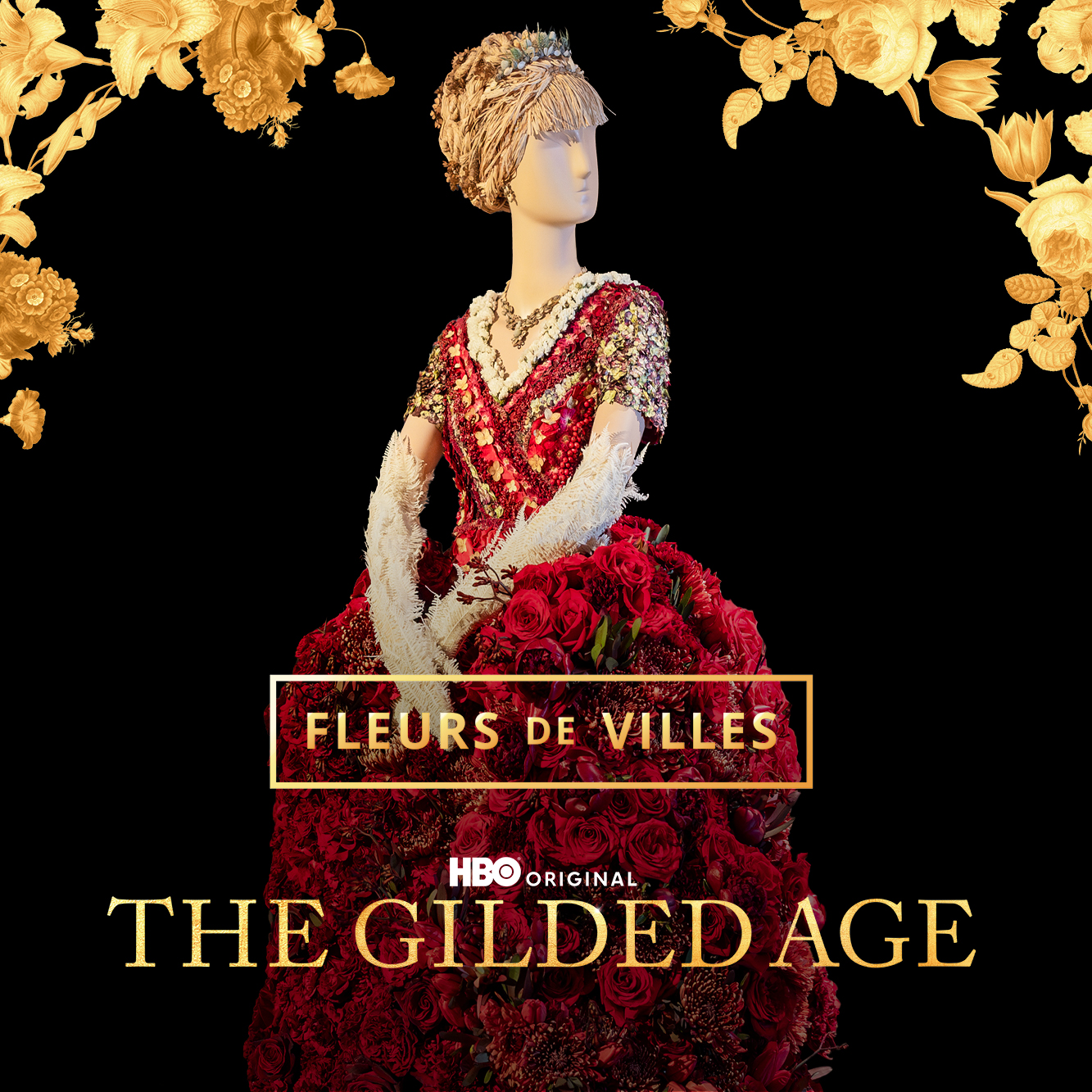
Where history and high society convene, The Gilded Age comes to life in flowers.
In a flower-filled partnership with HBO Max®, Fleurs de Villes THE GILDED AGE is touring six iconic estates and gardens across the U.S.
This spectacular floral show series celebrates the critically acclaimed HBO drama through our signature floral storytelling, bringing the world of ambition, power and Gilded Age grandeur to life in full bloom. Created by top local floral designers, each show features a curated collection of one-of-a-kind fresh floral mannequins inspired by unforgettable moments from the series – from Bertha Russell's triumph at the Metropolitan Opera and Peggy Scott's engagement celebration, to Marian Brook and Larry Russell's romance, and Agnes van Rhijn's steadfast defence of old New York society.
HISTORIC ESTATES, FLORAL STORIES
It was fitting that Fleurs de Villes THE GILDED AGE debuted at Cheekwood Estate & Gardens in Nashville from August 1–9, 2026. Like the world of HBO's The Gilded Age, Cheekwood was born from extraordinary ambition. After selling the Maxwell House Coffee Company in 1928, Leslie and Mabel Cheek set out to build a country estate to rival the great estates of the North. They commissioned renowned New York architect Bryant Fleming to design not only the limestone mansion, but also its interiors, gardens and fountains—creating a complete work of art. Nearly a century later, Nashville's talented floral artists filled those grand halls and gardens with spectacular fresh floral mannequins inspired by the series, launching a new exhibition that celebrates the beauty, ambition and social drama of America's Gilded Age through flowers.
Let's take a closer look at the remarkable era in American history that inspired the Emmy-winning HBO drama.
THE GILDED AGE: HISTORY
In the glittering dawn of the 1880s, New York City sat perched on the brink of modernity – an age where steel rails cut across continents, mansions rose in the Belle Epoch style, and fortunes swelled to dizzying heights. This was the Gilded Age: a time that looked glittering on the surface, but hid deep unrest underneath. The term itself comes from Mark Twain, whose 1873 satirical novel coined “gilded” deliberately – not pure gold, but overlaid with a thin gold wash. Beneath opulent balls and railroad empires, political corruption, poverty, and stark social division proliferated.
THE GILDED AGE: ON-SCREEN
Enter the HBO Original Series The Gilded Age, created, written and produced by Julian Fellowes (of Downton Abbey fame), a period drama set against this tumultuous period of tremendous growth and change in culture, technology, politics and class. At its heart is Marian Brook (Louisa Jacobson), a young woman orphaned in rural Pennsylvania, who comes to live with her two aunts on East 61st Street in Manhattan. Her aunts – Agnes van Rhijn (Christine Baranski), the rigid old-money matriarch, and her more gentle sister Ada (Cynthia Nixon) – embody the resistance of “old New York” to the brash arrivistes.
Across the street move the Russells: George Russell (Morgan Spector), a ruthless railroad tycoon, and his ambitious wife Bertha (Carrie Coon), both the personification of “new money.” Bertha’s arrival in society sets off a fierce competition – she wants a place among the established elite, but Agnes stubbornly refuses to admit her. New York high society was notoriously closed off during this era, with just 400 “rightful” members according to social arbiter Ward McAllister, and many wanted to keep it that way. Meanwhile, Marian, caught between loyalty and her own path, dreams of a life beyond marriage for status. Her friendship with Peggy Scott (Denée Benton), a Black aspiring writer and Agnes’s secretary, opens windows into the period’s evolving social currents.
Historically, while many characters are fictional, they are deeply rooted in real tensions of the era. Some are inspired by real-life figures – for instance, the Russells echo the wealthy industrialists, or robber barons of the Gilded Age, and the show even references real architects like Stanford White. The series doesn’t shy away from major social debates either: in Season 3, issues like the temperance movement and the politics of race and class take centre stage.
The Gilded Age is more than just costumes and carriages. It’s a richly layered portrait of a moment when America was gilded on the outside but restless and fracturing beneath – and its characters are living embodiments of everything that made that era so dazzling, dangerous, and deeply consequential.
.svg)